Introduction: Not Every Food Product Has the Same Shipping Requirements
Not all food products require the same transportation conditions.
Some products must remain frozen from origin to delivery, while others only need refrigeration to maintain freshness and food safety. Shipping every product the same way can lead to unnecessary costs or, even worse, compromised product quality.
This is where refrigerated food shipping becomes essential.
Temperature-controlled transportation helps preserve product integrity throughout the supply chain, but the correct approach depends on the type of food being shipped. Factors such as temperature range, shelf life, packaging, and transit time all influence how freight should move.
In this guide, we’ll look at the most common foods that require refrigerated shipping, why their transportation needs differ, and what shippers should consider to maintain a reliable cold chain.
Which Foods Commonly Require Refrigerated Shipping?
Many industries rely on refrigerated transportation, but not every product requires the same handling.
Dairy Products
Milk, cheese, yogurt, butter, and other dairy products require consistent refrigeration to slow bacterial growth and maintain product quality.
Because dairy products often move through regional distribution networks, maintaining stable temperatures throughout transit is essential.
Meat and Poultry
Fresh meat and poultry require carefully controlled refrigerated transportation, while frozen meat products require even stricter temperature management.
Improper handling during loading, transfers, or delivery can significantly reduce shelf life or result in rejected shipments.
Seafood
Seafood is one of the most temperature-sensitive freight categories.
Whether shipping fresh fish, shellfish, or frozen seafood, maintaining the proper temperature throughout transportation is critical for food safety and product quality.
Frozen Foods
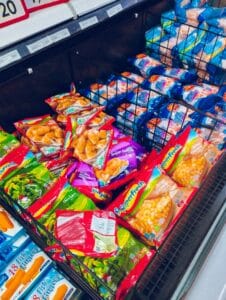
Frozen vegetables, prepared meals, desserts, and similar products require uninterrupted frozen transportation.
Unlike refrigerated products, frozen goods have very little tolerance for temperature fluctuations. We discussed these challenges in more detail in The Biggest Mistakes Shippers Make With Frozen Freight, where preparation and handling play a major role in maintaining product integrity.
Fresh Produce
Many fruits and vegetables require refrigeration to preserve freshness during transportation.
However, different produce items have different ideal temperature ranges, making proper shipment planning especially important.
Prepared and Ready-to-Eat Foods
Prepared meals, packaged sandwiches, salads, and similar products often require refrigerated transportation to maintain quality and comply with food safety requirements.
For these shipments, consistent temperature control throughout transit is just as important as delivery timing.
Why Different Foods Require Different Temperature Controls
There is no single temperature that works for every refrigerated shipment.
Different food products have different storage requirements based on their composition, shelf life, and sensitivity to temperature changes.
For example:
- Frozen foods require temperatures that keep products completely frozen throughout transit.
- Chilled products need stable refrigeration but are not intended to freeze.
- Fresh produce often requires temperature ranges that maximize freshness without causing damage.
Maintaining these conditions requires more than simply setting the reefer unit to a specific temperature.
Proper monitoring, airflow, loading practices, and handling all contribute to maintaining product integrity throughout transportation.
We explored how continuous monitoring supports temperature consistency in How Is Temperature Monitored in Reefer LTL?, where monitoring practices help reduce temperature deviations during transit.
The Biggest Risks When Shipping Refrigerated Food
Refrigerated food shipments face several risks between pickup and final delivery. Many of these problems are operational rather than mechanical.
A reefer unit may function correctly while the freight still experiences temperature exposure because of delays, poor loading practices, extended door openings, or improper staging.
Temperature excursions
A temperature excursion occurs when a shipment moves outside its required temperature range. This can happen during transit, but it often occurs while freight is being loaded, transferred, or unloaded.
Even a relatively brief excursion may reduce shelf life or affect product quality. For particularly sensitive foods, it may also lead to rejection at delivery.
Learn more about the causes in How Temperature Excursions Happen in Reefer LTL.
Extended dock exposure
Refrigerated freight should not remain on an unrefrigerated dock longer than necessary.
Ambient temperatures, sunlight, open dock doors, and warehouse conditions can all affect product temperature. Frozen products are especially vulnerable because exposure can begin warming the outside of the pallet before the center shows a meaningful change.
This is why loading appointments, dock preparation, and communication between the shipper and carrier matter.
Improper airflow
Refrigerated trailers rely on airflow to distribute conditioned air throughout the trailer. Freight loaded too tightly against walls, ceilings, or refrigeration vents can interfere with that circulation.
Poor airflow may create uneven temperatures, even when the reefer unit is operating at the correct setpoint.
Shippers should follow appropriate loading patterns and avoid blocking the trailer’s airflow channels.
Delayed deliveries and missed appointments
Refrigerated food shipments are often scheduled around receiving appointments. Missing an appointment may cause the trailer to wait, return later, or reschedule for another day.
That creates additional transit time and increases the likelihood of temperature exposure, detention charges, or product rejection.
Cross-contamination
Food shipments must also be protected from contamination caused by dirty equipment, damaged packaging, incompatible products, or improper handling.
A refrigerated trailer should be clean, suitable for the commodity, and free from odors or residue that could affect the shipment.
How to Choose the Right Refrigerated Freight Service
The right service depends on shipment size, delivery urgency, product sensitivity, and lane requirements.
Refrigerated LTL is often a practical option when a shipment does not require the full capacity of a trailer. Multiple shippers share trailer space, allowing each business to pay for only the space it uses.
However, shared transportation may involve terminal transfers or additional handling. Shippers should understand how the carrier’s network operates before selecting a service.
A reefer LTL service may be appropriate for:
- Partial pallet shipments
- Regional food distribution
- Routine replenishment
- Frozen or refrigerated freight that does not fill a trailer
- Shipments moving through established temperature-controlled lanes
Refrigerated truckload shipping may be a better fit when:
- The shipment fills most or all of a trailer
- The product requires dedicated equipment
- Additional handling should be minimized
- The delivery schedule is highly sensitive
- Multiple stops are being managed under one shipment plan
Expedited refrigerated shipping may be necessary when transit time is the primary concern. Faster service can reduce the amount of time food spends in the transportation network, but it does not replace proper packaging, loading, monitoring, or appointment planning.
Shippers should compare more than the quoted rate. They should also ask about:
- Typical transit time
- Number of transfers
- Temperature-monitoring practices
- Equipment availability
- Communication during delays
- Claims procedures
- Experience with the specific food category
The cheapest option may become expensive if the shipment arrives late, damaged, or outside the required temperature range.
How Should Refrigerated Food Be Prepared for Shipping?
Proper preparation begins before the carrier arrives.
The reefer trailer is designed to maintain product temperature. It should not be treated as equipment that rapidly cools warm freight after loading.
Food should therefore be brought to the required shipping temperature before pickup.
Shippers should also confirm that:
- Packaging can tolerate refrigerated or frozen conditions
- Pallets are stable and properly wrapped
- Air can circulate around the freight
- Temperature requirements are written clearly
- Pickup and delivery appointments are confirmed
- Product counts and condition are documented
- The bill of lading includes accurate handling instructions
Temperature instructions should be specific. Writing “keep refrigerated” may not provide enough information for a sensitive shipment.
The documentation should identify the required setpoint or acceptable temperature range, along with any special instructions for continuous operation, loading, or delivery.
Photographs taken before pickup can also help document packaging condition, pallet configuration, and product temperature.
For a more complete preparation process, see How to Prepare a Reefer LTL Shipment.
Food Safety and Transportation Compliance
Refrigerated food transportation must support food safety throughout loading, transit, transfers, and unloading.
The FDA’s Sanitary Transportation Rule establishes requirements intended to protect food from unsafe transportation practices. These requirements can involve equipment condition, sanitation, temperature controls, training, and recordkeeping.
The FDA provides additional information through its Sanitary Transportation of Human and Animal Food guidance.
Responsibility may be shared among shippers, loaders, carriers, and receivers depending on the transportation arrangement.
Shippers should clearly communicate:
- Required temperature conditions
- Sanitation expectations
- Loading requirements
- Product compatibility restrictions
- Monitoring or documentation requirements
Carriers should use suitable equipment and follow the agreed transportation instructions. Receivers should inspect the freight promptly and document any concerns at delivery.
Compliance is not limited to the reefer unit’s setpoint. It depends on the complete process surrounding the shipment.
What Happens if Refrigerated Food Arrives Too Warm?
A receiver may inspect the product temperature, packaging condition, trailer condition, seal, and shipment records before accepting the freight.
When a shipment arrives outside the expected range, the receiver may:
- Accept the shipment with notation
- Place the freight on hold
- Request additional temperature documentation
- Reject part of the shipment
- Reject the entire shipment
- Ask for a food-safety or quality review
A temperature reading alone does not always determine whether food is safe or usable. Product type, exposure duration, packaging, internal product temperature, and applicable food-safety standards may all affect the decision.
Shippers should avoid instructing a receiver to accept questionable freight without appropriate review.
When a problem occurs, the parties should preserve:
- Temperature records
- Delivery receipts
- Bills of lading
- Product photographs
- Trailer information
- Seal records
- Pickup and delivery times
- Written communications
Clear records help determine where the issue occurred and whether a freight claim may be appropriate.
Conclusion: Reliable Refrigerated Food Shipping Requires More Than a Reefer Trailer
Dairy, meat, seafood, frozen foods, produce, and prepared meals all depend on temperature-controlled transportation, but their shipping requirements are not identical.
Successful refrigerated food shipping requires the right service, suitable equipment, accurate temperature instructions, proper loading, reliable scheduling, and clear communication.
The reefer unit is only one part of the cold chain. Packaging, dock handling, terminal transfers, transit time, and delivery execution all affect whether the product arrives in acceptable condition.
GreenlineX provides refrigerated transportation services for shippers moving frozen and temperature-sensitive freight. Our team can help evaluate shipment size, lane requirements, timing, and service options before pickup.